
Planning
How Long Does It Take to Finish a Basement in Bellevue, WA?
A phase-by-phase basement finishing timeline for Bellevue homes: design, permits, inspections and construction, plus what the rainy season changes.
By Shawn, True Level Remodeling阅读中文版
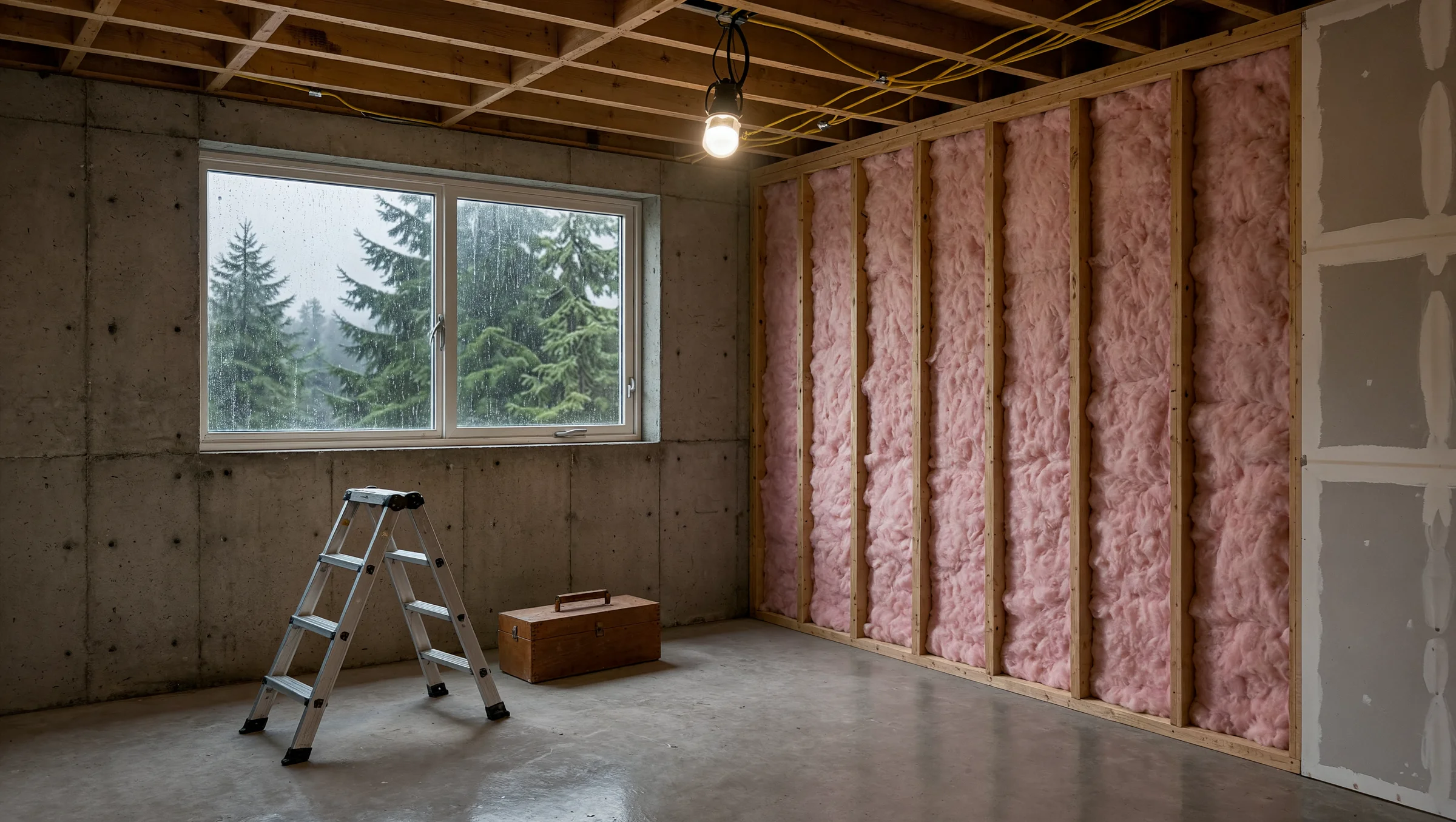
Finishing a basement in Bellevue usually takes about 2 to 4 months from the first meeting to a finished space. The construction itself is typically 6 to 10 weeks for a full finish of an unfinished basement. Moisture checks, design and the permit make up the rest.
The biggest swing in the schedule is the permit. Bellevue treats a basement that was already finished differently from one that’s bare concrete, and that difference can add weeks before work starts.
How long does it take to finish a basement?
| Type of basement project | Construction time | Total, first meeting to finished |
|---|---|---|
| Refresh of a finished basement: flooring, paint, lighting | 1–3 weeks | 3–6 weeks |
| Bedroom or office in an already-finished basement | 3–6 weeks | 1.5–2.5 months |
| Unfinished basement to living space, open plan | 6–10 weeks | 2.5–4 months |
| Unfinished basement with a bathroom, wet bar or new egress window | 8–12+ weeks | 3–5 months |
| Basement ADU with a kitchen and its own entrance | 12+ weeks | 4–6+ months |
These are typical ranges, not promises. Your written quote should include a schedule for your specific basement.
How long does each phase of a basement finish take?
1. Water check and design: 2–6 weeks
Start by confirming the basement stays dry, because no schedule survives water behind new drywall. Look after heavy rain, and fix leaks, grading or gutters first; our checklist Is your basement dry enough to finish? walks through it.
Design covers the layout, which rooms will be bedrooms (each needs an escape window), where the bathroom drains can go, how ducts and beams affect ceiling height, and finishes. The residential code sets minimum ceiling heights for basements, so measure under the lowest duct or beam early.
2. Plans and permit: same day to several weeks
Bellevue uses two permits for basements:
- Already-finished basement: the City lists “converting a finished basement into living or sleeping space(s)” as work that qualifies for a building permit with no plan review, which “can be issued the same day” (Building permits, no plan review, checked November 2026).
- Unfinished basement: “converting a garage or unfinished basement into living space” is covered by the single-family remodel permit with plan review, which also includes the electrical, mechanical and plumbing work (Single-Family Remodel Permit, checked November 2026).
Over the past year, Bellevue’s plan review for single-family remodels took a median of 13 days and an average of 34 days (Permit Processing Timelines, completed November 16, 2025 to November 16, 2026). Add a week or more before that to draw the plans. Our Bellevue permit guide covers other work that needs a permit.
3. Construction: 6–10 weeks for most full finishes
A typical sequence for an unfinished basement:
- Pre-construction meeting and protection: 1–2 days. Clean out the space and protect stairs and the floor above.
- Egress window, if needed: 3–7 days. Cutting the foundation, digging and setting a window well. It’s outside work, so weather matters.
- Framing: 3–7 days. Wood touching concrete must be pressure-treated or naturally durable.
- Rough-in electrical, plumbing and heating: 1–2 weeks. A bathroom may mean cutting the slab for drains.
- Rough inspections, then insulation and its inspection: 3–7 days, depending on inspection timing.
- Drywall, taping and sanding: 1–2 weeks, including drying time between coats.
- Paint, doors and trim: 1 week.
- Flooring: 2–5 days.
- Fixtures, smoke and carbon monoxide alarms, final inspection and punch list: about 1 week.
Steps 4 to 6 are where the schedule usually stretches: trades work in sequence, and nothing can be covered until it passes inspection.
Which inspections does Bellevue require for a basement?
Inspections are part of the timeline, not an extra. For work under the no-plan-review permit, Bellevue requires a pre-construction meeting “before starting any work,” an inspection “before any concrete is poured,” another “before any framing or insulation is covered,” and a final “after the work is completed” (Bellevue, no-plan-review permit page). If the inspector finds the project is bigger than that permit allows, the City requires plans, and “plan review may involve a three-week turnaround time.”
The same page lists the code items that come up most often in basements:
- An emergency escape window or door in every sleeping room, with at least 5.7 square feet of openable area and a sill no higher than 44 inches. Our basement moisture guide lists the window-well sizes.
- A smoke alarm in every bedroom, and smoke and carbon monoxide alarms outside each sleeping area.
- Stair headroom of at least 6 feet 8 inches, and handrails 34 to 38 inches high.
- Insulation on exterior walls under the state energy code.
Bellevue’s Inspections page (checked November 2026) adds two points worth knowing: work must start within one year of the permit and be completed within three years, and “most insurance companies will not cover damages that involve work not inspected as required by the city.”
What does the rainy season change for a basement finish?
Winter is a good time to start, because it shows you where water comes in. If the walls and floor stay dry through a wet Bellevue November and December, you can frame with more confidence.
A few things to plan for:
- Most of the work is indoors, so rain rarely stops framing, wiring or drywall.
- Drywall mud and paint dry slower in cold, damp air. Keep the basement heated during the job, and run a dehumidifier if the contractor recommends it.
- Egress windows and drain work outside depend on dry spells. Digging a window well in saturated soil is slower, and new concrete needs protection in cold weather; Bellevue publishes a memo on concreting in cold weather.
- Design and permits can happen now, so construction starts on time, even if you’d rather finish by spring.
What makes basement finishing take longer?
- Water problems found after the walls are opened, or not fixed before framing
- Cutting a new egress window into the foundation
- Adding a bathroom below the sewer line, which can need a pump
- Low ducts, beams or pipes that have to be rerouted to reach the required ceiling height
- A project that grows beyond the no-plan-review permit, triggering plans midway
- Special-order doors, flooring or fixtures not chosen before work starts
- A failed inspection that has to be corrected and rescheduled
Common questions
Can we live at home while the basement is finished? Yes, most families do. Expect noise and dust during framing and drywall, and short shutoffs of power, water or heat when the trades connect new work. A good contractor seals the stairway and tells you the shutoff dates in advance.
Do I need a permit to finish a basement in Bellevue? Yes. Turning an already-finished basement into living or sleeping space can use the no-plan-review permit; converting an unfinished basement needs the remodel permit with plan review. Either way, inspections are required.
Is finishing the basement faster than building an addition? Usually much faster, because there’s no foundation or roof to build and the plan review is shorter. Our comparison of an addition, an ADU or a basement shows the review times side by side.
Plan your basement with us
We give free on-site estimates for basement finishing in Bellevue and the Eastside. On the visit we look for signs of water, check ceiling height and egress options, and give you a written, itemized quote that lists scope, permits and schedule line by line. Request your free estimate.