
Planning
Interior Painting in Winter in Bellevue, WA: What to Know
Painting inside this winter in Bellevue, WA? See the temperatures paint labels require, drying and ventilation tips, room order and lead-safe rules.
By Shawn, True Level Remodeling阅读中文版
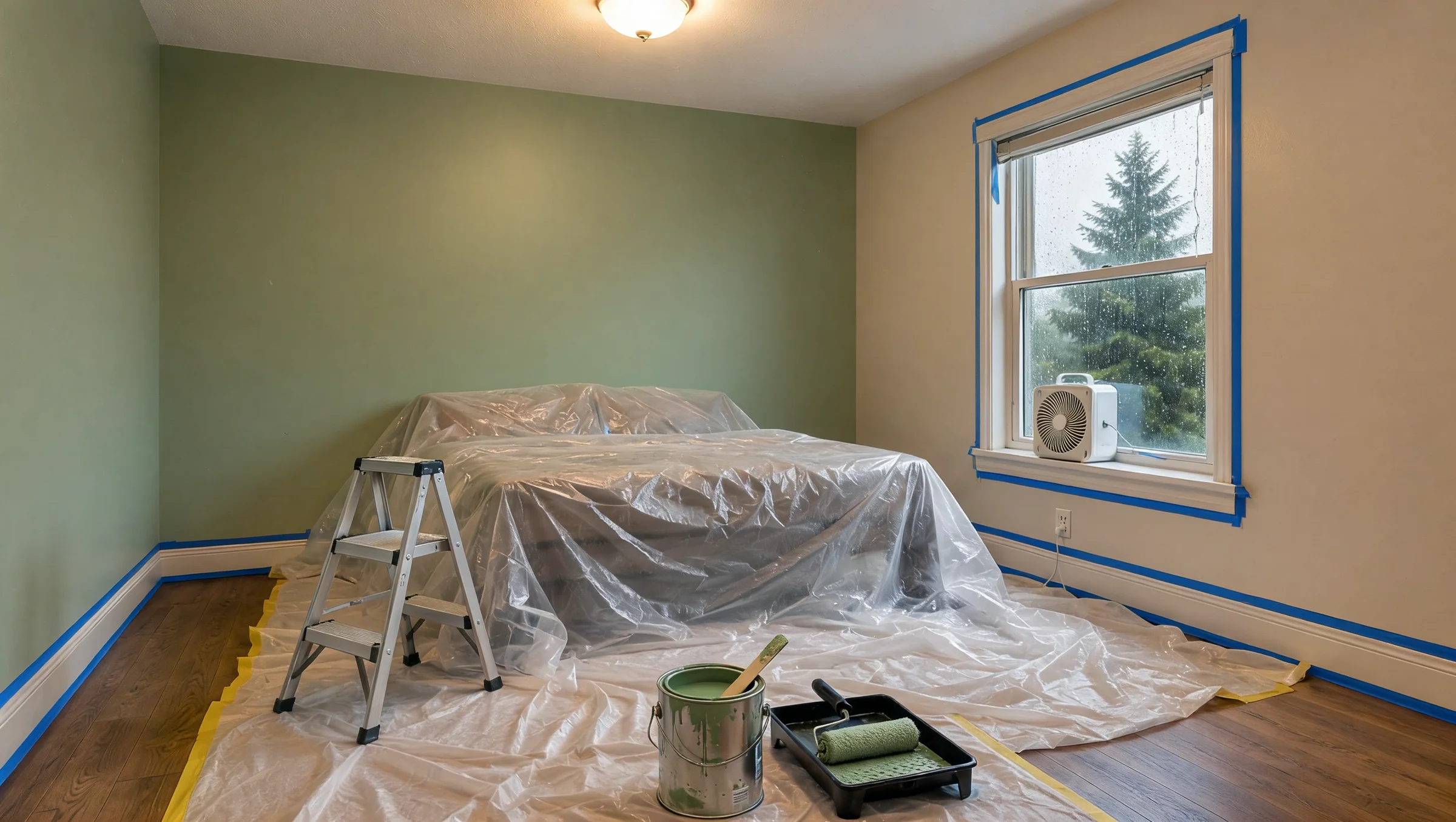
Yes, you can paint inside in a Bellevue winter, and it’s a good time to do it: keep the room above the minimum temperature on the paint label (above 50°F for one common interior latex), keep the heat on and fresh air moving, and allow more time between coats than the label’s standard figures. In a home built before 1978, a paid painter who disturbs more than 6 square feet of old paint in a room must follow the EPA’s lead-safe rules.
Winter weather doesn’t stop interior work. What it changes is temperature, moisture and airflow inside the house, and those decide whether the paint dries well.
What temperature does interior paint need?
Each paint lists a minimum temperature on its product data sheet, and drying times are measured at a warm, moderate standard. As an example, Sherwin-Williams’ data sheet for Emerald Interior Latex says to “Apply at temperatures above 50°F” and gives these drying times “@ 77°F, 50% RH”: touch, 1 hour; recoat, 4 hours. It adds that “drying and recoat times are temperature, humidity, and film thickness dependent” (Sherwin-Williams product data sheet, checked November 2026).
| What to check | What a label typically gives | What it means in winter |
|---|---|---|
| Minimum application temperature | A floor, e.g. “above 50°F” | Air and walls must stay above it during painting and drying, including overnight |
| Drying time | Touch and recoat times at 77°F, 50% humidity | Cooler, damper rooms take longer; wait longer before the second coat |
| Ventilation | “Use only with adequate ventilation” | Bring in fresh air without letting the room get too cold |
| Surface condition | Clean, dry, sound surface | Dry any condensation before you start |
Other brands and products give different numbers, so read the data sheet for the exact paint you’ll use. The wall surface matters as well as the air: an exterior wall or a window sill can be colder than the middle of the room.
How does winter humidity affect drying?
Water-based paint dries as water leaves the film, so damp indoor air slows it down. In a Pacific Northwest winter, the house is closed up, and cooking, showers and drying laundry add moisture. That moisture collects on the coldest surfaces: window glass, frames and sills, and exterior walls in corners and behind furniture.
Before painting:
- Look for condensation and mildew on and around windows and in corners of exterior walls. Paint on a damp surface won’t last.
- Fix the source first. If the windows drip every morning, read window condensation: fix or replace.
- Run the heat a day ahead so walls warm up, and keep it on until the paint has dried.
- Avoid drying laundry or long showers near rooms that are being painted.
How do you ventilate a room in winter?
The goal is fresh air in, fumes out, without letting the room drop below the label temperature. The Sherwin-Williams label says: “Use only with adequate ventilation. To avoid overexposure, open windows and doors or use other means to ensure fresh air entry during application and drying.”
In practice:
- Crack a window and run a fan that pushes air out of the room, rather than opening everything wide.
- Keep the room’s heat on, and close the door to the rest of the house if fumes bother anyone.
- Use the bathroom or kitchen exhaust fan if you’re painting nearby.
- Paint rooms where people sleep early in the day so they can air out before night.
The label also says that if you notice “eye watering, headaches, or dizziness,” increase fresh air or wear respiratory protection.
In what order should you paint the rooms?
Plan the order around how you live, so you always have somewhere to sleep, cook and work. A common sequence:
- Rooms you can close off, such as a spare bedroom or office.
- Bedrooms, one or two at a time, so each has a day or more to dry and air out.
- Hallways and stairs, when traffic is lowest.
- Kitchen and bathrooms, scheduled around cooking and showers.
- Living areas last, so the house stays usable.
Ceilings go before walls, and trim and doors usually last. Doors and trim painted with an enamel need time before they’re closed or handled heavily, so plan when each door can stay open.
What about bathrooms and kitchens?
These rooms see the most moisture, so preparation matters more than the paint. Clean off grease in kitchens and any mildew in bathrooms before painting. Sherwin-Williams’ data sheet describes removing mildew with “1 part liquid bleach and 3 parts clean water,” with eye protection and gloves, and letting the surface dry before painting. Never mix bleach with ammonia or detergents.
A bathroom needs a working exhaust fan. Washington requires at least 50 cfm for a bathroom fan run when needed, or 20 cfm for one that runs continuously, ducted outside (WAC 51-51-1505, checked November 2026). If the paint keeps peeling or the ceiling grows mildew, the fan may be the real problem; our small bathroom remodel guide covers the fan rules.
What if your home was built before 1978?
Older paint may contain lead, and sanding or scraping it releases dust. Contractors working in pre-1978 homes “must be EPA certified and trained in lead-safe work practices” when they disturb “more than six square feet of painted surfaces on the interior of a building” (EPA, RRP rule FAQ, checked November 2026).
The federal rule bans some methods outright: “open-flame burning or torching of painted surfaces,” high-speed sanding or grinding unless the machine has a shroud and a HEPA vacuum attachment, and heat guns at 1,100°F or more. For interior work, the firm must cover or remove furniture, cover ducts, close and cover doors, and cover the floor with plastic at least 6 feet beyond the work (40 CFR 745.85, checked November 2026).
Expect a painter to set this up before scraping in an older house. Our guide to remodeling an older Bellevue home covers lead and asbestos testing.
Do you need a permit to paint inside in Bellevue?
Painting is not on the City’s list of work requiring permits. The City’s Work Requiring Permits page (checked November 2026) doesn’t list painting. Work done alongside it, such as moving walls, adding circuits for new lights or replacing a bathroom fan on a new circuit, can need permits.
Exterior painting is different only because of the weather. For when to schedule it, see when you can paint a house exterior in Bellevue.
Common questions
What’s the lowest temperature for painting indoors? It depends on the product. Sherwin-Williams Emerald Interior Latex, for example, says above 50°F; check the data sheet for yours, and keep the room above it until the paint is dry.
How long should I wait between coats in winter? At least the recoat time on the label, which is measured at about 77°F and 50% humidity. In a cooler or damper room, wait longer and check that the first coat is dry and not tacky.
Can I live in the house while rooms are painted? Usually, yes. Paint in stages, ventilate each room and keep bedrooms ready for the night. In a pre-1978 home, keep people out of rooms where old paint is being scraped or sanded.
Plan your painting with us
We give free on-site estimates for interior and exterior painting in Bellevue and the Eastside. We look at each room and the condition of the walls, trim and ceilings, and give you a written, itemized quote with the preparation, coats and order of rooms listed. Request your free estimate.